5 Profitable Side Hustles for Occupational Therapists in the UK
Therapyway Editorial Team · Published 2 September 2026 · 4 min read

5 side hustles for occupational therapists in the UK
If you are looking to build an income outside your main NHS or local authority role, occupational therapy offers more options than most allied health professions.
The independent sector is surprisingly uncrowded. As of July 2026, the HCPC register holds 47,885 occupational therapists across the UK. However, RCOT workforce data indicates only around 650 are working purely in the independent sector. That leaves a significant gap in the market for practitioners willing to take on private work.
Going private does not have to mean quitting your main job. Many occupational therapists run a side practice on a non-working day or during evenings. Here are five realistic ways to build a private income stream.
1. Direct private clients and self-pay therapy
This is the most traditional route into private practice. You assess and treat individuals who pay for their own care or use private health insurance. Common areas include paediatric sensory integration, hand therapy, and support for older adults wanting to maintain independence at home.
Private occupational therapy sessions in the UK typically run from £60 to £120 for a 50-minute session.
The hardest part of seeing direct clients is usually finding them. Building a referral network takes time, and handling the marketing, booking, and payment admin yourself eats into your billable hours.
This is where Therapyway fits in. It is a UK marketplace that connects patients directly with independent, HCPC-registered therapists. You publish a profile, set your own availability and rates, and clients book you through the platform. It gives you the clinic software you need to run your practice, including calendar management, clinical notes, and payments. It is free to join with no monthly subscription, and Therapyway takes a 10% commission on paid bookings only. It is a low-risk way to start building a private caseload without upfront costs.
This route is particularly valuable if you are working in the UK on a Skilled Worker or Health and Care Worker visa. Under UK rules, you are generally permitted to take on up to 20 hours of supplementary work per week, provided it is in the same profession and at the same professional level as your main sponsored job. Because you control your own calendar on Therapyway, you can easily build this supplementary income around your NHS shifts without having to commit to a rigid second employment contract.
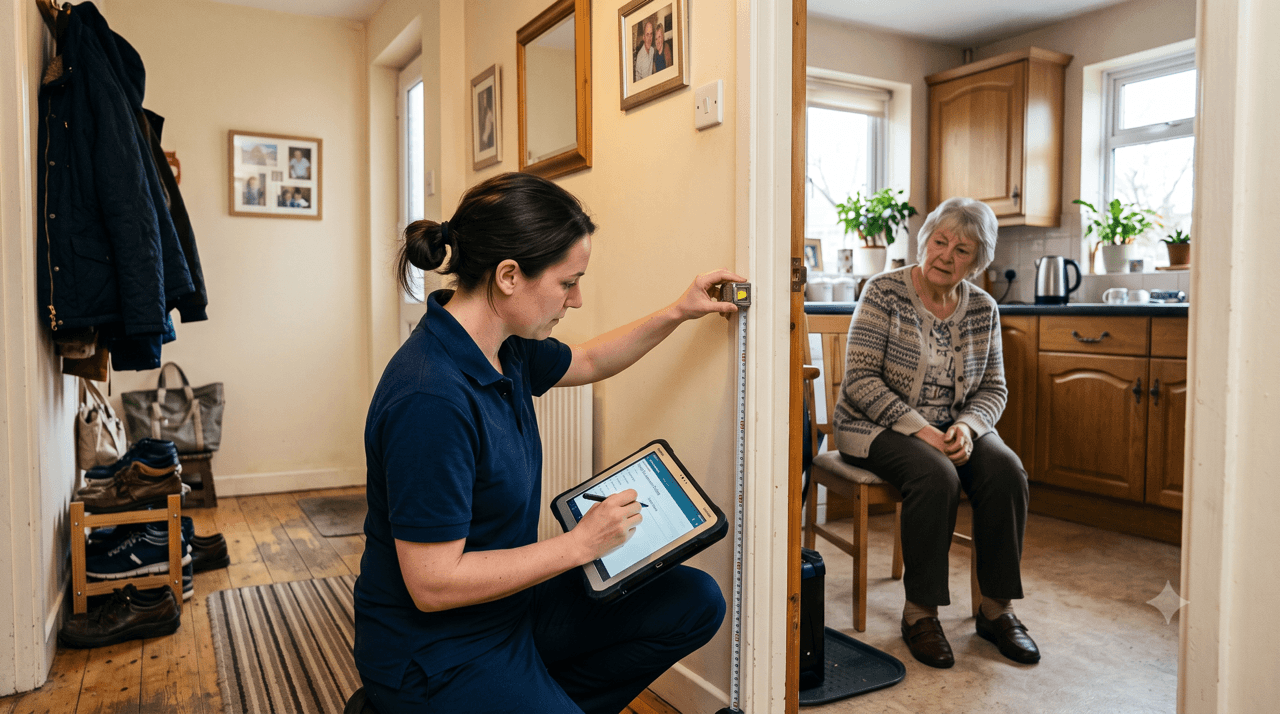
2. Housing and local authority adaptation assessments
A large volume of occupational therapy work revolves around housing adaptations, from level access showers to through-floor lifts. Much of this is funded through the Disabled Facilities Grant (DFG) process.
Because council capacity is often the bottleneck for these grants, local authorities frequently commission independent occupational therapists to clear their backlogs. This work is highly structured. You conduct the assessment, specify the necessary adaptations, and submit the report to the council. It is steady work if you build a relationship with local housing teams.
3. Case management for complex rehabilitation
Case managers coordinate rehabilitation and care for people with complex needs, often following catastrophic injuries. This work is usually funded through personal injury settlements.
Unlike a standard clinical intervention that might last six weeks, case management involves long-term relationships. You work alongside solicitors, care agencies, and other allied health professionals to ensure the client's needs are met over months or years. It requires excellent organisational skills and the ability to manage multiple stakeholders at once.
4. Vocational rehabilitation and workplace assessments
Vocational rehabilitation focuses on keeping people in work or helping them return after an illness or injury. Your clients in this setting are usually employers or occupational health insurers, rather than the individuals themselves.
The work involves conducting ergonomic workplace assessments, advising on reasonable adjustments, and creating return-to-work plans. Because businesses are paying to reduce staff absence, this sector often commands higher hourly rates, but the sales cycle requires networking directly with HR departments and occupational health providers.
5. Medico-legal and expert witness reporting
When someone pursues a personal injury or clinical negligence claim, the court needs an expert to assess the claimant's functional ability, future care needs, and equipment costs.
This is highly specialised work and not suited for newly qualified therapists. Instructing solicitors expect substantial post-qualification experience in a specific clinical area. The work is unforgiving of imprecision. You are writing for a court, which is a completely different skill from standard clinical note keeping. However, for senior therapists, medico-legal reporting is one of the most lucrative independent paths available.
What you need before taking on independent work
Whichever route you choose, you cannot simply start seeing private clients without getting your administration in order first.
You must maintain your HCPC registration. You also need appropriate professional indemnity insurance. Your RCOT membership includes professional indemnity cover that applies to you as an individual, but if you decide to set up a limited company, that entity will need its own separate policy.
Finally, register for self-assessment with HMRC before you send your first invoice. Tracking your income and expenses from day one will save you a massive headache at the end of the tax year.