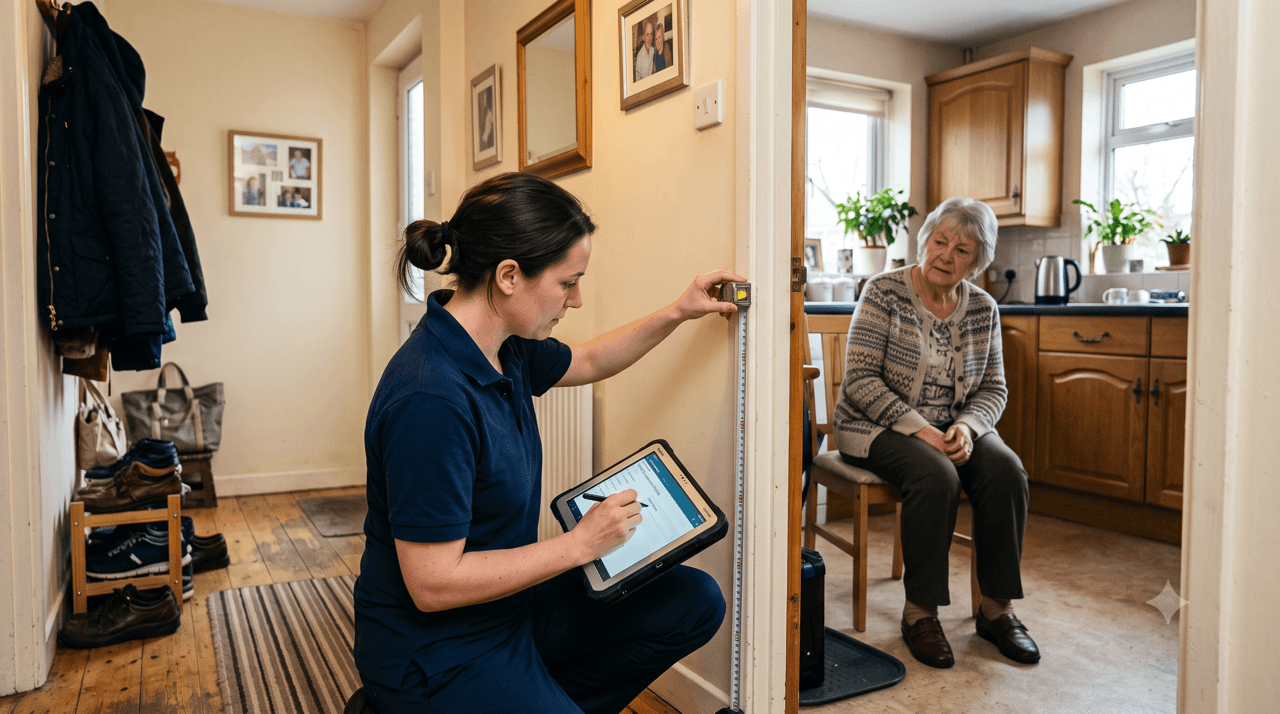
5 free CPD resources for UK Occupational Therapists
Therapyway Editorial Team · Published 12 October 2026 · 9 min read

5 Free CPD Resources for UK Occupational Therapists
Continuing professional development (CPD) is an essential part of maintaining your registration with the Health and Care Professions Council (HCPC). For occupational therapists (OTs) across the UK, keeping knowledge and clinical skills up to date helps support safe, effective and evidence-informed practice.
However, finding relevant CPD opportunities can be challenging. Busy clinical caseloads, limited workplace training budgets and the cost of paid courses can make professional development difficult, particularly for self-employed therapists and those exploring independent practice.
The good news is that several organisations provide free learning resources, webinars and professional development materials relevant to occupational therapy.
In this guide, we explore five resources that can help occupational therapists develop their knowledge across neurological rehabilitation, home adaptations, adult social care, safeguarding and independent practice.
1. Parkinson's UK Learning Hub
Focus: Neurological rehabilitation, Parkinson's management and maintaining independence.
Website: Parkinson's UK Professional Learning Hub
Parkinson's UK provides learning resources for health and social care professionals supporting people living with Parkinson's. Its educational materials can help occupational therapists understand how the condition affects daily activities, participation and quality of life.
Parkinson's can affect far more than movement. Changes in cognition, mood, sleep, motivation and energy levels may also influence a person's ability to participate in meaningful occupations.
What can occupational therapists learn?
Understanding Parkinson's: Explore common symptoms and their impact on everyday activities and functional independence.
Managing fatigue and apathy: Understand how fatigue, reduced motivation and other non-motor symptoms can affect engagement in daily routines.
Communication and non-motor symptoms: Develop awareness of symptoms that may be less visible but can significantly affect occupational performance.
Applying learning to practice: Consider how assessment, activity adaptation, pacing and environmental modifications may support independence.
Parkinson's UK has also offered structured foundation learning for professionals. Check the current learning hub for course availability, duration and certificate arrangements.
Cost: Free learning resources are available.
Certificate: Availability depends on the specific course or module.
Format: Online learning and educational resources.
Best suited to: Occupational therapists working in neurological rehabilitation, community services, reablement and long-term condition management.
2. OT CPD
Focus: Occupational therapy webinars, clinical learning and professional practice.
Website: OT CPD
Occupational therapists often benefit from learning directly from clinicians who understand the practical challenges of assessment, intervention planning and service delivery.
OT CPD provides occupational therapy-focused learning opportunities that can help professionals explore clinical approaches, discuss practice challenges and learn about developments within the profession.
What can occupational therapists learn?
Clinical interventions: Explore approaches relevant to physical health, mental health and occupational performance.
Equipment and adaptive technology: Improve your understanding of equipment options and their potential applications in practice.
Clinical case discussions: Consider different approaches to assessment, intervention and clinical decision-making.
Independent practice: Explore professional topics relevant to therapists considering self-employment or developing private services.
Webinars can be particularly useful if you prefer presentation-based learning and opportunities to engage with other professionals.
Cost: Selected webinars may be free. Other masterclasses and recorded learning resources may require payment.
Certificate: Depends on the individual session.
Format: Online webinars and recorded resources, depending on availability.
Best suited to: OTs seeking profession-specific learning, practical clinical insights and opportunities to explore new areas of practice.
Tip: Check the event description before registering to confirm the price, learning objectives and whether a certificate is provided.
3. Closomat Webinars and The Occupational Therapy Service
Focus: Home adaptations, accessible bathrooms and environmental modifications.
Website: Closomat
Environmental assessment is an important part of occupational therapy, particularly for professionals working in adult social care, community rehabilitation, discharge planning and housing adaptations.
Closomat has provided educational opportunities relating to accessible bathroom design and specialist toileting equipment, including webinars associated with The Occupational Therapy Service. These topics can help therapists consider how environmental changes may support personal care, dignity and independence.
What can occupational therapists learn?
Bathroom adaptations: Consider access, transfer requirements, available space and personal hygiene needs.
Long-term conditions: Explore how environmental adaptations may support people living with neurological conditions, physical disabilities and progressive illnesses.
Energy conservation: Consider how accessible environments and appropriate equipment may reduce the effort required to complete daily activities.
Assistive technology: Develop clinical reasoning around the suitability of specialist equipment and environmental modifications.
For example, an occupational therapist assessing a client who struggles with bathing may need to consider transfer ability, fatigue, falls risk, carer support and the physical layout of the bathroom before recommending an adaptation.
Product demonstrations can provide useful practical information, but recommendations should always be guided by individual assessment, clinical reasoning and the person's needs.
Cost: Check individual webinar listings for current pricing.
Certificate: Depends on the event and attendance requirements.
Format: Online educational sessions, with recordings available where offered.
Best suited to: Occupational therapists working in housing adaptations, community rehabilitation, equipment provision and adult social care.
4. Foundations: Home Adaptations and Disabled Facilities Grants
Focus: Housing adaptations, Disabled Facilities Grants (DFGs) and statutory services.
Website: Foundations
Foundations is the national body for Home Improvement Agencies in England. Its work is relevant to occupational therapists involved in housing adaptations, accessible living and helping people remain independent in their homes.
For OTs working with local authorities or providing independent housing assessments, understanding the relationship between clinical recommendations, housing requirements and funding arrangements is an important part of effective practice.
What can occupational therapists learn?
Disabled Facilities Grants: Improve your understanding of the funding framework for eligible home adaptations.
Complex housing assessments: Explore considerations relating to access, ramps, stairlifts, through-floor lifts and structural modifications.
Professional networking: Learn from discussions involving occupational therapists, housing professionals and adaptation services.
Service improvement: Understand approaches to adaptation pathways, assessment processes and reducing delays.
These learning opportunities can help therapists understand the wider systems that influence whether recommended adaptations can be delivered.
For example, a housing assessment may identify a clinical need for improved access, but the final solution may also depend on property constraints, funding eligibility, technical feasibility and the local authority's processes.
Cost: Check individual events and resources for current charges. Some networking and learning opportunities may be free.
Certificate: Varies by event.
Format: Professional events, webinars, networking opportunities and guidance materials.
Best suited to: Local authority OTs, housing adaptation specialists, independent practitioners and professionals involved in Disabled Facilities Grant assessments.
5. Social Care Institute for Excellence (SCIE)
Focus: Adult safeguarding, the Mental Capacity Act and person-centred social care.
Website: Social Care Institute for Excellence
The Social Care Institute for Excellence (SCIE) provides evidence-informed resources for professionals working across health and social care. Although its learning materials are not exclusively designed for occupational therapists, many topics are relevant to everyday OT practice.
Occupational therapists may need to consider mental capacity, safeguarding, risk, consent and best-interests decision-making when carrying out functional assessments, recommending care arrangements or supporting hospital discharge.
What can occupational therapists learn?
Mental Capacity Act: Understand the principles of capacity assessment, decision-specific capacity and best-interests decision-making.
Adult safeguarding: Develop awareness of abuse, neglect, professional responsibilities and appropriate reporting procedures.
Deprivation of Liberty Safeguards: Learn about the safeguards relevant to certain care arrangements involving people who lack capacity to consent.
Person-centred care and reablement: Explore approaches that promote choice, participation, independence and the recovery of everyday skills.
These topics can be particularly useful when supporting people whose cognitive, physical or psychological needs affect their ability to manage daily activities safely.
For instance, during a functional assessment, an OT may need to distinguish between a person's ability to complete a task, their understanding of associated risks and their right to make decisions about their own care.
Cost: Free guidance and educational resources are available. Some structured or accredited learning opportunities may carry a fee.
Certificate: Depends on the individual learning resource.
Format: Online guidance, videos, learning materials and selected e-learning opportunities.
Best suited to: Occupational therapists in adult social care, community rehabilitation, discharge planning, reablement and multidisciplinary teams.
How to record CPD for an HCPC audit
Completing a course is only one part of continuing professional development. Occupational therapists should also consider what they have learned, how the learning relates to their practice and how it may influence the service they provide.
The HCPC does not prescribe a fixed number of CPD hours or points for registrants. Instead, its CPD standards focus on maintaining relevant, continuous learning and being able to demonstrate the value of that learning.
HCPC registrants renew their registration on a two-year cycle, and a sample of professionals is selected for CPD audit. Keeping a clear record throughout the registration period can make it easier to demonstrate how your development meets the standards.
For each webinar, course or learning activity, consider recording the following:
1. Activity details
Record the course title, provider, completion date and approximate time spent on the activity.
2. Reason for learning
Explain why you chose the activity. For example, you may want to improve your understanding of bathroom adaptations or refresh your knowledge of mental capacity assessments.
3. Key learning points
Summarise the clinical principles, legislation, assessment approaches or practical techniques you learned.
4. Reflection on your practice
Describe how the learning has influenced, or may influence, your clinical reasoning and professional decisions.
For example, a webinar about accessible bathrooms might prompt you to consider transfer requirements and carer access more carefully during future home assessments.
5. Benefits for service users
Explain how applying the learning could improve safety, independence, participation, dignity or the overall quality of the service you provide.
6. Supporting evidence
Keep relevant certificates, notes, learning materials or other supporting documents where available. A certificate can support your record, but it does not replace the need for meaningful reflection.
You can also review the HCPC's official CPD guidance to understand the current requirements and expectations.
Building your independent occupational therapy practice
Professional development helps you maintain and expand your clinical knowledge. However, if you are planning to work independently, you may also need practical systems for managing appointments, client records, payments and day-to-day administration.
Therapyway is designed to connect qualified, HCPC-registered occupational therapists with individuals and families seeking private therapy services across the UK.
Through Therapyway, therapists can create a professional profile, showcase their services, manage their availability and connect with potential clients while maintaining their clinical autonomy.
There are no upfront charges or monthly subscription fees. Therapyway charges a 10% platform fee when a client books and pays for a session.
Whether you are exploring private practice alongside your current role or planning to develop an independent service, the right tools can help you spend less time on administration and more time focusing on meaningful client outcomes.
Ready to take the next step?
Join Therapyway as a Independent Therapist
Final thoughts
Free CPD resources can help occupational therapists continue learning without placing additional pressure on their professional development budget.
From neurological rehabilitation and accessible housing to safeguarding and reablement, the resources in this guide offer starting points for exploring topics relevant to different areas of OT practice.
Before enrolling, check the current availability, cost and certification arrangements for each activity. Most importantly, reflect on how your learning relates to your own practice and how it can contribute to better outcomes for the people you support.
Editorial note: This article is intended for professional development and signposting purposes. Course availability, costs and certificate arrangements may change. Occupational therapists should consult the relevant provider and follow current HCPC standards and professional guidance when applying learning to individual client care.