Starting Independent Practice alongside your NHS or clinic role: the essential UK checklist
Therapyway Editorial Team · Published 26 October 2026 · 3 min read

You do not have to leave your NHS job or private clinic role to explore independent practice. But before accepting your first private client, check that your employment arrangements, professional responsibilities and business setup allow it.
For occupational therapists, speech and language therapists and physiotherapists, these are the checks to prioritise.
1. Confirm you are eligible
Keep your HCPC registration current and offer only services within your competence. Your employed role does not automatically establish readiness for every private service. Maintain relevant CPD and arrange professional support appropriate to your experience.
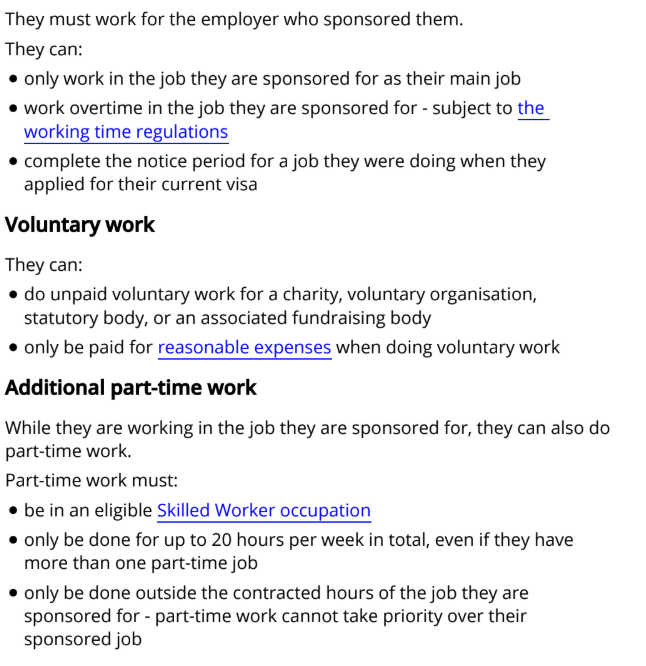
If your immigration status restricts work, check whether it permits self-employment. Skilled Worker visa conditions include restrictions on additional work. Do not assume everyone has an unrestricted 20-hour allowance.
See the reference image below, then check the latest GOV.UK guidance to confirm your permitted hours and eligibility for freelance or self-employed work.
2. Check your contract and declare conflicts
Read your employer’s secondary-employment and conflicts-of-interest policies. Declare outside work and obtain approval where required. Private clinic contracts may also contain confidentiality, non-solicitation or other restrictions.
Keep clear boundaries:
Schedule private work outside contracted hours and manage fatigue.
Do not use employer records, contact lists, equipment or branding without authorisation.
Do not use your employed position to steer patients towards your paid service.
If an existing patient approaches you privately, seek employer guidance and address the conflict before accepting.
NHS England’s guidance for clinical staff explains outside-employment declarations. Follow your own organisation’s rules across the UK.
3. Arrange indemnity for your private work
HCPC requires appropriate professional indemnity. Do not assume your employer’s arrangements cover independent appointments.
Confirm that your cover includes your services, reports, home visits and online work, where relevant.
Planning your independent practice?
Explore Therapyway and contact the team about your next step in private occupational therapy, speech and language therapy or physiotherapy. Start with a clearly defined service and the checks below.
4. Check safeguarding and service-registration requirements
Arrange the disclosure checks appropriate to your role and nation. Eligible self-employed practitioners can obtain enhanced DBS checks through an umbrella body in England and Wales. Scotland uses PVG, with membership required for regulated roles; Northern Ireland uses AccessNI.
Separately, check whether your service needs registration with CQC, Healthcare Improvement Scotland, Healthcare Inspectorate Wales or RQIA. Requirements depend on the activities and service model. HCPC registration does not settle this question.
5. Prepare consent, records and essential procedures
Before your first appointment, establish:
Valid consent and a suitability assessment.
Secure clinical records and privacy information.
Safeguarding, complaints and emergency procedures.
Clear fees, payment arrangements and fair cancellation terms.
For health information, identify an appropriate data protection lawful basis and special-category condition. Check whether you must pay the ICO fee. Keep employer and private records separate.
6. Put the basic business arrangements in place
Choose your business structure, check HMRC registration requirements and keep income and expense records. Assess premises, equipment and lone-working risks.
Review training against your actual work, including safeguarding and emergency response. There is no universal certificate bundle that replaces competence.
You need reliable booking, confidential communication, documentation and payment arrangements. Social media accounts and an expensive clinic are not prerequisites.
Before taking bookings: confirm eligibility, resolve employer conflicts, arrange indemnity and complete the checks relevant to your service.
General UK guidance, checked 24 October 2026. Requirements vary by nation, role and circumstances.